
Sunnyvale · 1972
The machine was broken.
Business was excellent.
A popular game. A worrying phone call. A problem measured in quarters.
Read the comic ↓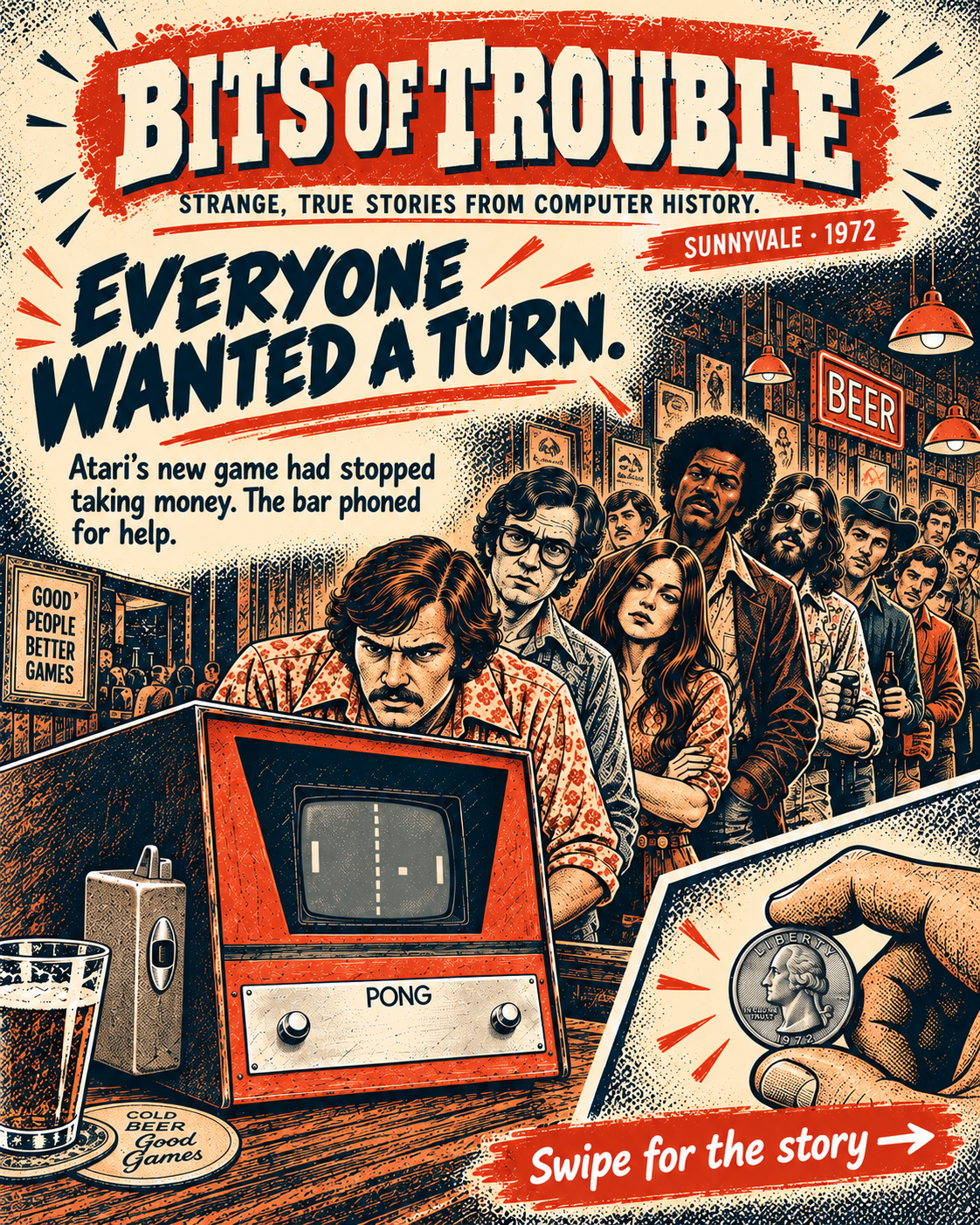
Everyone wanted a turn.
Swipe through the three pages. Tap an image to inspect it more closely.
Read the comic as text
EVERYONE WANTED A TURN.
Atari’s new game had stopped taking money. The bar phoned for help.
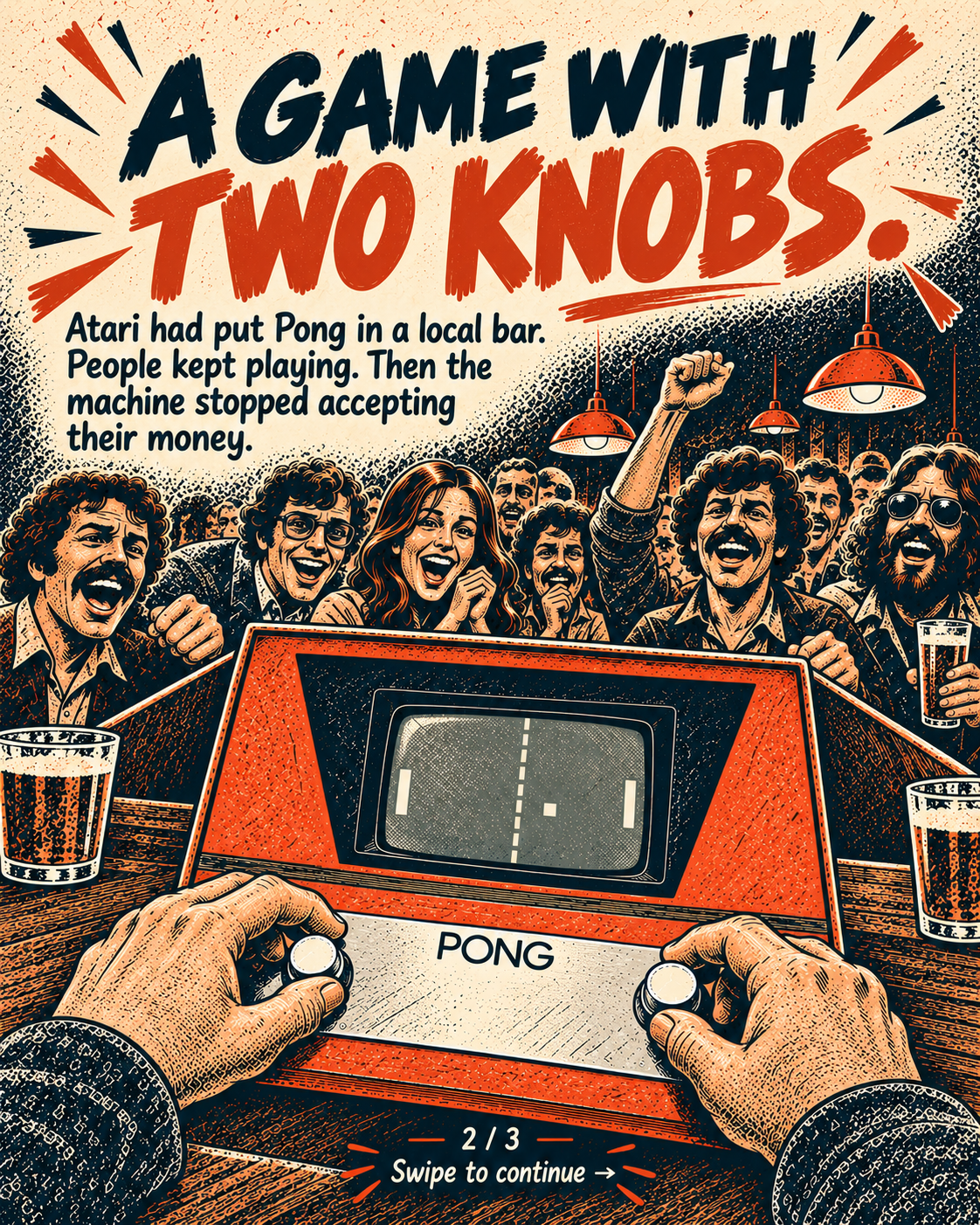
A GAME WITH TWO KNOBS.
Atari had put Pong in a local bar. People kept playing. Then the machine stopped accepting their money.
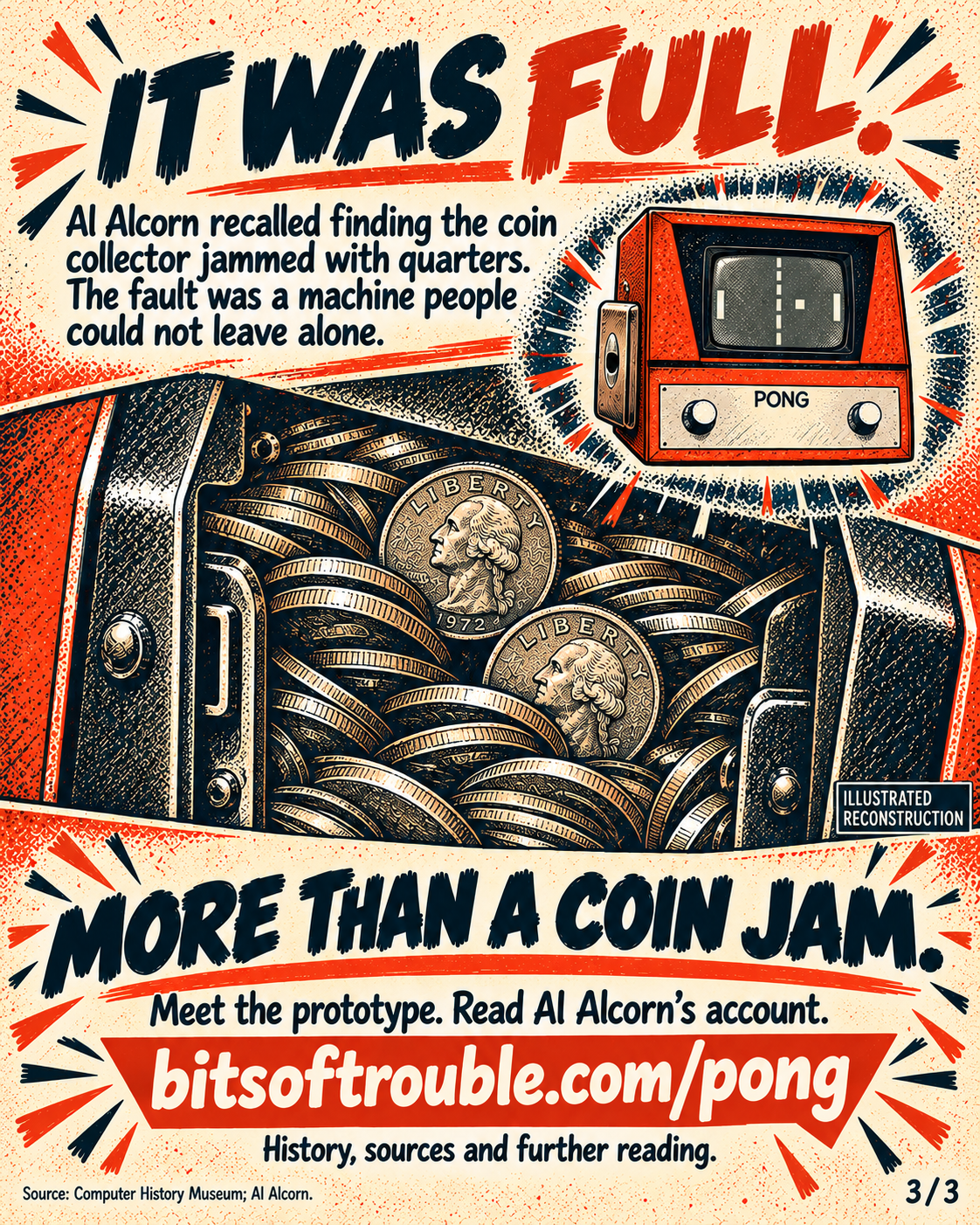
IT WAS FULL.
Al Alcorn recalled finding the coin collector jammed with quarters. The fault was a machine people could not leave alone.
MORE THAN A COIN JAM. Meet the prototype. Read Al Alcorn’s account. bitsoftrouble.com/pong. History, sources and further reading.
More than a coin jam
The prototype, the people and the recollection.
A bar became the test bench
In 1972, Atari put a Pong prototype in Andy Capp’s bar in Sunnyvale. Two players turned two knobs to move their paddles. The Computer History Museum identifies its surviving prototype as the unit used in that trial. See the museum’s account and prototype record.
The call that sounded like bad news
Al Alcorn later recalled being called to the bar because the game had stopped working. His explanation was wonderfully mundane: the coin collector was full enough to jam. The breakdown was also a sign that customers kept paying to play. Read Alcorn’s interview with Brian Deuel.
It began as practice
In that interview, Alcorn says Nolan Bushnell gave him a simple table-tennis game as an exercise. Alcorn thought he was building a real product. When the prototype proved enjoyable, the team took it out to meet paying customers. That makes the bar test more than a funny repair story: it was where a small experiment met an audience. Alcorn describes the assignment and test.
What we know—and what varies
The museum account places the fault after two weeks; Alcorn’s 2000 interview says about a month. Retellings also differ about the container. Our comic therefore avoids specifying either. It presents the jam as Alcorn’s recollection, not a contemporary maintenance report. The bar customers are invented figures, and the interior view of trapped coins is an illustration, not an engineering diagram.
Sources & further reading
- Computer History Museum: Pong (Revolution exhibit)
Story page: prototype at Andy Capp's, Sunnyvale 1972; coin-catcher jammed with quarters
- Computer History Museum: Oral History of Allan (Al) Alcorn, interviewed by Henry Lowood (2008)
pp. 14-17: Walgreens TV, bolt-on laundromat coin box, bread pan overflowing, no instructions, people arriving at 9 a.m., 'scooping out fistful of quarters'
- Atari Compendium: Al Alcorn interview
Pong section: call after about a month that the machine had broken; coin box so full it jammed
- Keith Smith, The Golden Age Arcade Historian: Video Game Mythbusters - The Malfunctioning Pong
Whole post: timing varies (next day to two weeks); near-identical 1931 Bingo pinball story; verdict inconclusive